

Yo! As a supplier of transmission gears, I've seen firsthand the unique characteristics of automotive and industrial transmission gears. Let's dive into the differences between these two types of gears and explore why understanding them matters.
Design and Function
First off, let's talk about the design and function of automotive and industrial transmission gears. Automotive gears are designed to transfer power from the engine to the wheels of a vehicle. They need to be lightweight, efficient, and able to handle a wide range of speeds and loads. For example, in a car, you've got different gear ratios for acceleration, cruising, and climbing hills. The gears in an automotive transmission are often smaller and more precisely engineered to fit within the limited space of a vehicle's drivetrain.
On the other hand, industrial transmission gears are used in a variety of heavy - duty applications, such as manufacturing machinery, construction equipment, and power generation. These gears need to be extremely durable and capable of handling high torque and heavy loads. Industrial gears are often much larger and more robust than automotive gears. They're designed to operate continuously for long periods, sometimes in harsh environments with dust, heat, and vibration.
Gear Types
There are also differences in the types of gears commonly used in automotive and industrial applications. In the automotive world, you'll often find Precision Spur Gears. These gears have straight teeth and are relatively simple in design. They're great for high - speed applications and are commonly used in manual transmissions. Another common type in automotive is Clutch Transmission Gears, which are used to engage and disengage the power flow within the transmission.
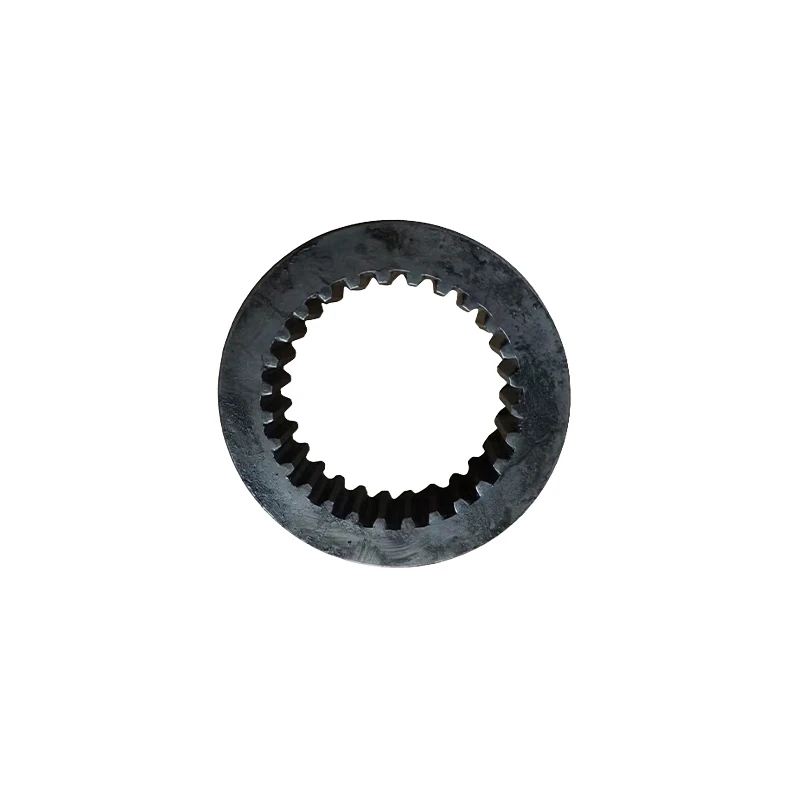
In the industrial sector, Compound Transmission Gears are quite popular. Compound gears consist of multiple gears on the same shaft, allowing for more complex gear ratios and torque multiplication. Internal Spline Gear is also widely used in industrial machinery. These gears have teeth on the inside of a circular bore and are used to transmit torque between shafts. And let's not forget about Gearbox Ring Gear, which is a large, circular gear often found in industrial gearboxes to provide a stable and efficient transfer of power.
Manufacturing Processes
The manufacturing processes for automotive and industrial transmission gears also differ significantly. Automotive gears need to be produced with high precision to ensure smooth operation and low noise. The manufacturing often involves advanced machining techniques such as CNC (Computer Numerical Control) machining, which allows for very accurate shaping of the gears. Heat treatment is also crucial for automotive gears to enhance their strength and durability.
Industrial gears, due to their larger size and heavy - duty nature, may require more specialized manufacturing processes. For large - scale industrial gears, forging is a common method. Forging involves shaping the metal under high pressure to create a strong and dense gear structure. After forging, the gears are then machined to achieve the final shape and dimensions. Just like automotive gears, industrial gears also undergo heat treatment, but the parameters and processes may be different to suit their specific requirements.
Material Selection
Material selection is another area where automotive and industrial transmission gears diverge. Automotive gears are typically made from materials that offer a good balance between strength, weight, and cost. Steel alloys are commonly used, as they can be heat - treated to achieve the desired hardness and toughness. Some high - performance automotive applications may also use aluminum or titanium alloys for their lightweight properties.
Industrial gears, on the other hand, often require materials that can withstand extreme stress and wear. High - strength steel and alloy steels are the go - to materials for most industrial applications. These materials can handle the high torque and heavy loads associated with industrial machinery. In some specialized applications, such as in the mining industry, gears may be made from materials with high resistance to abrasion and corrosion.
Maintenance and Service
Maintenance and service requirements are different for automotive and industrial transmission gears as well. In the automotive industry, regular maintenance is essential to ensure the long - term performance of the transmission. This includes checking fluid levels, changing transmission fluid at recommended intervals, and inspecting the gears for wear and tear. Due to the relatively smaller size and more accessible nature of automotive transmissions, maintenance can often be carried out by a skilled mechanic in a relatively short time.
Industrial gears, however, often require more extensive maintenance. The large size of industrial machinery and the complex nature of their gear systems mean that maintenance can be a time - consuming and labor - intensive process. Regular inspections, lubrication, and alignment checks are necessary to prevent breakdowns. In some cases, specialized equipment and technicians may be required for maintenance and repair.
Cost Considerations
Cost is always a factor when it comes to transmission gears. Automotive gears are generally more cost - effective to produce due to the high - volume manufacturing processes used in the automotive industry. The large number of vehicles being produced means that economies of scale can be achieved, reducing the per - unit cost of the gears.
Industrial gears, on the other hand, can be quite expensive. The specialized materials, large size, and complex manufacturing processes contribute to a higher cost. Additionally, the cost of maintenance and potential downtime in case of a gear failure also need to be taken into account when considering the overall cost of using industrial transmission gears.
Conclusion
In conclusion, while both automotive and industrial transmission gears serve the purpose of transferring power, there are significant differences between them in terms of design, function, gear types, manufacturing processes, material selection, maintenance, and cost. Understanding these differences is crucial for engineers, manufacturers, and end - users to make the right choices for their specific applications.
If you're in the market for high - quality transmission gears, whether it's for automotive or industrial use, we're here to help. Our team of experts has in - depth knowledge of both types of gears and can provide you with the best solutions for your needs. Don't hesitate to reach out and start a conversation about your gear requirements. We're eager to assist you and make sure you get the right gears for your project.

References
- Automotive Engineering Handbook, several chapters on transmission systems.
- Industrial Machinery Design Manual, sections related to gear design and applications.
- Various industry whitepapers on gear manufacturing and maintenance.